
Moving into a new house is busy, and water is probably the last thing on your mind. Yet within days, many homeowners notice a faint white crust inside the kettle, streaks on the shower screen or a chalky ring around the taps. That film is usually limescale, and it is a sign that your water is hard. Ireland's Environmental Protection Agency (EPA) publishes a yearly report on drinking water in public supplies, and its 2025 edition is the main national check on Irish tap water. It focuses on safety, not hardness, but it is still a useful starting point.
What makes water hard?
Hard water contains high levels of dissolved calcium and magnesium. Rain picks up these minerals from rock and soil on its way to your home. Hard water is common across Ireland and the UK, so check rather than assume.
Is hard water a problem for my home?
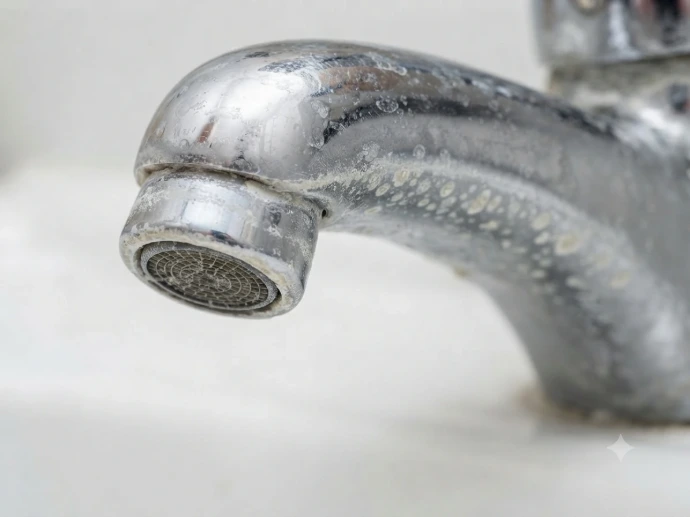
Hardness matters most when water is heated or left to dry. As water warms or evaporates, the minerals come out of solution and form limescale. That is why scale builds up on kettles, heating elements and glass. Over time, scale can make appliances work harder and may shorten their life. It can also make everyday cleaning take longer.
Why does this matter for families?
If your household includes children, the kettle, the taps and the shower are used every day. A kitchen and bathroom free of scale are easier to keep tidy. Appliances that run smoothly are also less likely to surprise you with a repair bill at a busy time.
What should I check in the kitchen?
- Kettle: Look inside for a white crust or loose flakes. A thick layer means the kettle has been working with hard water for a while.
- Dishwasher: Check the filter and the inside of the door for a chalky film. Many models have a salt compartment for softening, so look for one and check whether it has salt in it.
- Coffee machine: Find out when it was last descaled. Many machines show a warning light when descaling is due.
- Taps: Look at the base of the spout and around the aerator, the small mesh at the tip. White rings in these places are a common sign of hard water.
What should I check in the bathroom?
- Showerhead: Look at the nozzles. If the spray is uneven or weak, scale may be blocking some of the holes.
- Shower screen and tiles: A chalky film is much easier to clean off in the first week than after months of build up.
How can I test the water hardness myself?
Hardness test strips or drops are available from shops and online stores. Dip the strip, wait the time stated on the pack and compare the colour to the chart. This gives a rough reading, not a lab result, so treat it as a starting point.
You can also check what your local supplier publishes. Uisce Éireann covers the Republic of Ireland, while Northern Ireland Water covers the North.
What can I do about scale I have already found?
Light scale on taps and glass can be cleaned with a suitable descaler. Follow the label, rinse well and test on a small area first. Check the manufacturer's guidance before using any product on appliances, especially coffee machines. If you notice a fault, a loss of hot water or scale that will not come off, call a qualified engineer.
Is a whole home system the answer over time?
For many homes, a water softener is the most practical way to reduce scale across the whole house. It treats the water before it reaches your appliances. Renewell Water is Ireland's Number 1 rated water filtration company. You can read what customers say at https://renewellwater.com/reviews.
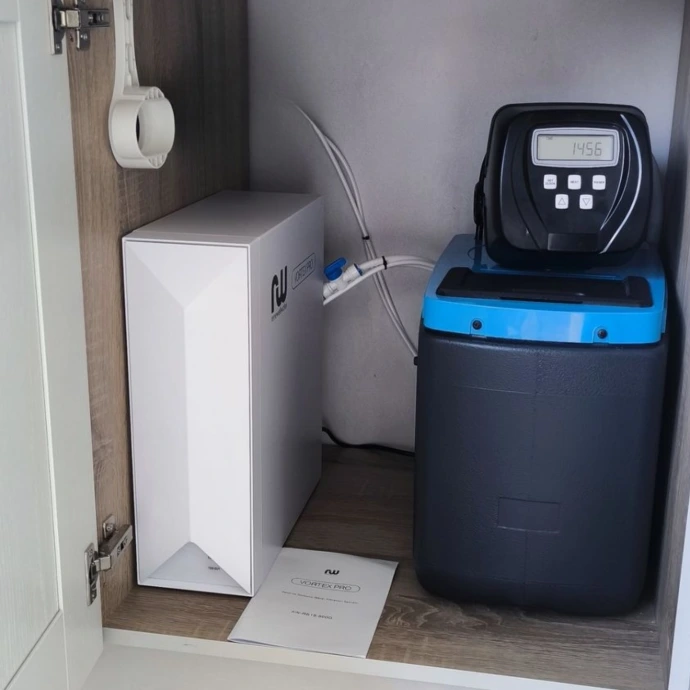
The Gold Package pairs two systems that each do a different job. The Blu Maxi is a water softener for hard water. It treats the water as it enters your home. This protects your kettle, boiler, dishwasher and taps from limescale. The Vortex Pro is a reverse osmosis system for drinking water, and it gives you filtered water at the kitchen tap. It also adds back some calcium and magnesium. The Tri Flow tap delivers that filtered drinking water through its own separate flow, so it stays apart from your everyday tap water. Explore the Gold Package
Renewell Water offers a free consultation for you. Book it by clicking here.